
Our Work
June 25, 2025
Rainbow River: Balancing Growth, Conservation, & Recreation
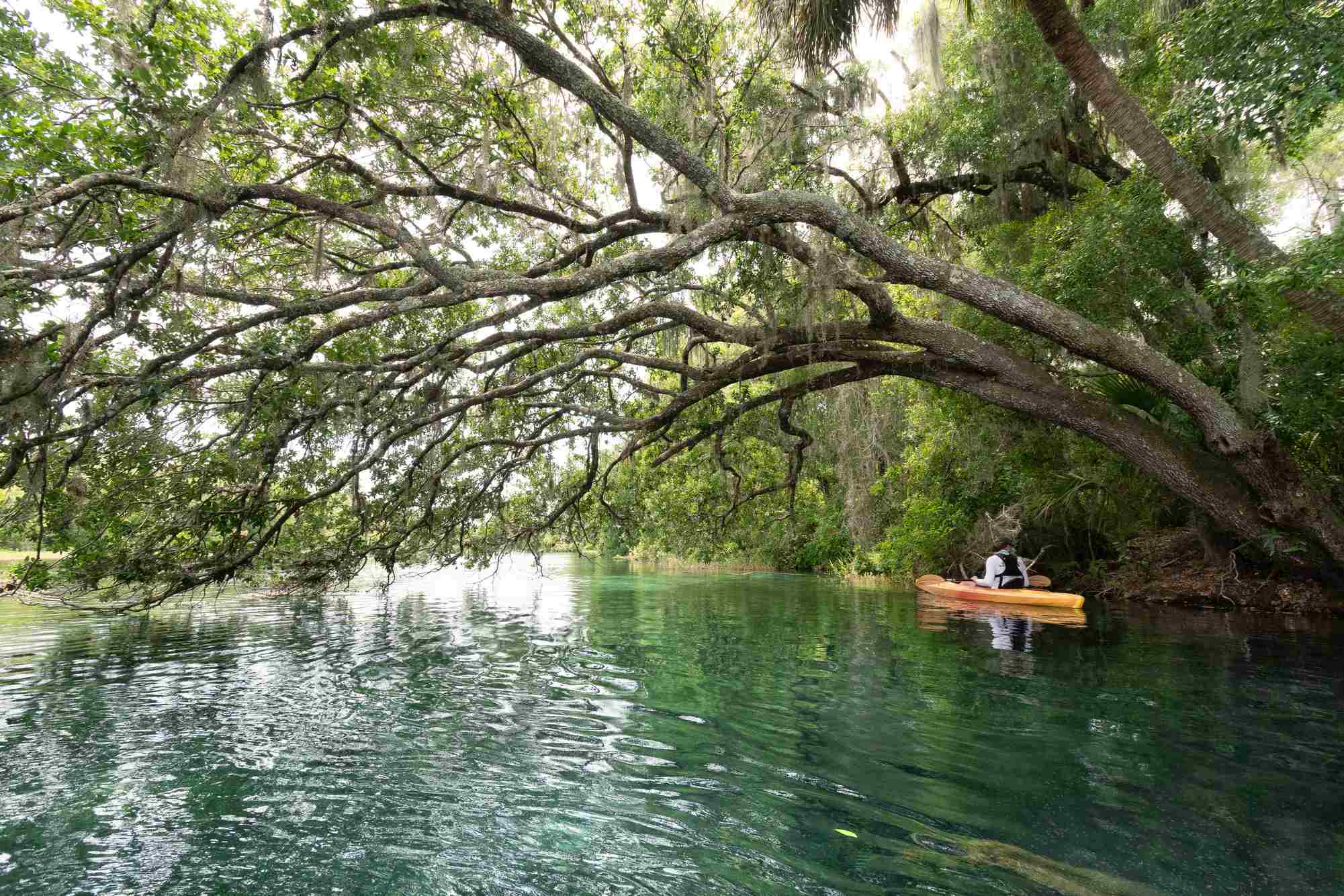
By Summer 2025 Photography Intern Lucas DelgadoRainbow River, located in Dunnellon, Florida, just outside the Ocala National Forest, boasts abundant wildlife and deep blue waters. Its headspring, Rainbow Springs, pours out 500 million gallons of 72-degree spring water per day, making it one of the largest first magnitude Springs in Florida. Additionally, there are 171 1st and 2nd magnitude Springs that flow within the Florida Wildlife Corridor delivering a cool liquid respite for recreators on a hot summer day. While paddling the river, one can see below the water’s surface where gaps in the seagrass show sand boils and textured limestone slabs protruding from the riverbed.
Rainbow Springs is one of Florida’s most visited Springs, where the 1,500-acre State Park along the eastern bank of the river draws over 330,000 visitors a year to admire the beauty and wildness of the river and bask in recreation. Visitors can enjoy activities like kayaking, paddleboarding, snorkeling, birding, tubing, and swimming. The importance of responsible recreation cannot be overstated. These areas are a popular getaway for a lot of people, so it’s important to treat the wilderness with respect.

A short distance from the KP Hole Park entrance, a creek splits off from the main river. In it, the water is a crystal teal blue and has a walkable depth, and if you look down in some spots in the creek, you can see the sand bubbling with aquifer water entering the stream from below! The creek is a quiet little shady oasis that is perfect for taking a rest from paddling downstream. Unfortunately, the famous leaning palm tree found along the creek (pictured) recently fell when too many visitors climbed on top of it, underlining the fragility of these wild places and the need for responsible recreation.

Rainbow River lies within a Pinch Point in the Florida Wildlife Corridor, meaning the wildlife connection from Central Florida to the rest of Florida and the Southeast United States becomes a bottleneck, only stretching about a mile wide in this section. Moving North, the Corridor then connects to the Big Bend region and beyond. This pinch point underscores the importance of keeping these parks and other natural lands along these routes conserved, as they serve as an important lifeline for wild animals and their ability to roam freely, increase their population, and thrive in Florida.

Rainbow Springs is also designated as an Outstanding Florida Water and Aquatic Preserve, and has its own Rainbow Springs Protection Zone. This zone aims to curb pollution and overdrawing from the Floridan Aquifer near the area of the park. The park also maintains a strict no wake/idle speed zone to protect the luscious aquatic vegetation and wildlife that call the river home.

Rainbow Springs 5/22
The main issues that plague the area stem from development, as the growth that has been documented in Marion County and the greater Ocala area is moving at an unsustainable rate. This continues to draw more water from the Aquifer and broaden use of fertilizers, which introduces greater contamination and lessened flow rates. This leads to excessive algal blooms that can use all the dissolved oxygen in the water essentially choking out the aquatic vegetation, which puts strain on the ecosystem, food web, and water quality. As Florida continues to develop it is imperative that we plan for this growth with the health of our springs and the connectivity of the Florida Wildlife Corridor in mind, so that special places where we recreate like Rainbow River can continue to thrive.
Click Here To Explore The FDEP Springs Protection Areas Map

Lucas Delgado | Photography Intern
Lucas is a senior majoring in Environmental Studies at the University of Central Florida. Not originally from Florida, the state’s beautiful and diverse landscapes inspired him to take up photography and pursue a career in conservation. After graduation he hopes to attend graduate school to deepen his knowledge and understanding of how to best protect Florida’s environment for the future. Lucas is a firm believer in the idea that art, education, and outreach are incredibly important to the mission of conservation and is very excited to contribute to the Florida Wildlife Corridor Foundation.
More Corridor News & Stories

October 5, 2026
September 2026 Newsletter
Florida is getting its first taste of fall, and we’re happy to be experiencing it in the Panhandle alongside our partners at our...

September 30, 2026
September 2026 Cabinet Conservation Approvals
TALLAHASSEE, FL – On September 29, the Florida Governor and Cabinet approved funding for the permanent conservation of 8,838 acres across seven properties...
September 1, 2026
Community Harvest: Eat Well & Do Good for Wild Florida
Eat well and do good this September. You can support the Florida Wildlife Corridor Foundation just by dining in September at any of...
September 1, 2026
August 2026 Newsletter
As August comes to a close, Florida’s summer landscape is alive with new beginnings. Across the Corridor, summer rains are breathing new life...
All News & Stories


